


FLORIDA ORDERS FLOCK CAMERAS OFF STATE ROADS BUT TAMPA BAY IS NOT DONE WITH THEM YET.
WHAT TAMPA, HILLSBOROUGH, PINELLAS & PASCO DRIVERS NEED TO KNOW ABOUT FLOCK CAMERAS, ALPR SURVEILLANCE & FOURTH AMENDMENT RIGHTS
Florida just made a major move against automated license plate reader cameras, but there is an important catch. The cameras are coming off Florida’s state roads, but not completely out of the Tampa Bay Area.
On August 31, 2026, the Florida Department of Transportation revoked permits for automated license plate readers (ALPRs) located in state highway rights-of-way and directed affected law enforcement agencies to remove them within 30 days.
As a result, the debate over Flock cameras has officially moved from a local controversy to a major Florida legal and constitutional issue. In Tampa, Hillsborough County, Pinellas County, Pasco County and surrounding communities, there are many important lingering questions that still need answered.
If a camera records where you drive, stores your vehicle information, and that information is later used in a criminal investigation, what are your rights?
This edition of our legal newsletter covers:
- Florida’s new order removing ALPR cameras from state roads
- Why Tampa Bay’s Flock camera network is NOT disappearing
- How license-plate readers can become evidence in a criminal case
- The Fourth Amendment questions surrounding long-term vehicle tracking
- What Tampa Bay drivers should know if a traffic stop or arrest begins with an ALPR hit
- What you should do if you believe surveillance technology played a role in your case
FLORIDA’S 30-DAY FLOCK CAMERA COUNTDOWN HAS BEGUN
The Florida Department of Transportation has ordered automated license plate readers located within state highway rights-of-way to be removed.
The order applies to Flock cameras and other ALPR technology installed along Florida’s state highway system.
Law enforcement agencies have 30 days to remove affected cameras, with FDOT indicating that it will remove devices that remain after the deadline.
This is significant because ALPR technology has become increasingly common throughout Florida.
These cameras can record information about passing vehicles, including:
- License plate information
- Date and time
- Location
- Vehicle make and model
- Vehicle color and other identifying characteristics
The technology can then make that information searchable by law enforcement.
Supporters argue that ALPR systems help police locate stolen vehicles, identify suspects and find missing people.
Critics argue that recording the movements of ordinary people who are not suspected of committing crimes raises serious privacy and constitutional concerns.
Florida’s decision to remove the cameras from state roads demonstrates just how serious the controversy has become.
ALL TAMPA BAY DRIVERS NEED TO PAY CLOSE ATTENTION:
Do not assume that Flock cameras are disappearing from Tampa Bay. They are not. The new FDOT order concerns cameras located on state roads and state rights-of-way.
Tampa Bay’s largest law enforcement agencies have indicated that they will comply with the state order, but they are not currently planning to eliminate their broader ALPR programs.
According to recent reporting:
- The Pinellas County Sheriff’s Office plans to remove cameras covered by the state order but has indicated that it does not intend to make a broader change to its ALPR program.
- Tampa Police plans to comply with the order while continuing its broader camera program.
- The Hillsborough County Sheriff’s Office has said it will comply with the order without announcing a larger change to its ALPR program.
- St. Petersburg Police plans to remove affected cameras on state roads but has not announced a broader elimination of its system.
In other words, the cameras may move, however, this doesn’t mean that the surveillance network is going away and it’s important we cover the significance of that distinction.
While any Flock cameras on a state highway may have to come down, cameras on county roads, municipal roadways or private property may not be affected by the same order. Meanwhile, Tampa Bay has a large and ever increasing network of ALPR technology.
 |
WHY THIS IS A FOURTH AMENDMENT ISSUE
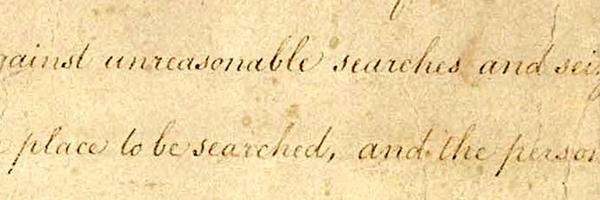
The Fourth Amendment protects people from unreasonable searches and seizures.
Traditionally, if police wanted to search someone’s home, vehicle or personal property, this constitutional rule generally required some combination of probable cause, a warrant or a recognized exception. This new technology is prompting everyone to question whether or not Flock and ALPR are violating our rights.
Consider what an ALPR system can potentially create – a very detailed record of where your vehicle has been.
One photograph of a license plate may not seem particularly intrusive, but imagine hundreds of photographs over weeks or months. Suddenly, the government may be able to reconstruct where a vehicle traveled, when it traveled there and how frequently it returned to particular locations.
- At what point does observing a vehicle become tracking a person’s movements?
- When does ordinary observation become a search?
- How long can information be retained?
- Who can access it?
- Can another agency search it?
- Can federal authorities obtain it?
- Can the information be used in a criminal prosecution?
And most importantly, what legal process is required before the government can turn that information into evidence against you?
These are not hypothetical questions anymore, they are becoming increasingly important issues in modern criminal defense.
HOW A FLOCK CAMERA CAN BECOME PART OF A CRIMINAL CASE
A driver may never know that an ALPR camera has recorded their vehicle. There may be no traffic stop, no warning, no citation, and no conversation with a police officer. But later, that information could potentially become part of an investigation.
For example, law enforcement investigating a crime may be trying to identify vehicles that were in a particular area at a particular time. An ALPR database may provide information that investigators use to develop a suspect.
That information can then be combined with:
- Traffic-camera footage
- License-plate information
- Body-worn camera footage
- Cell-phone records
- GPS or location information
- Social-media evidence
- Witness statements
- Vehicle-registration information
- Search warrants
- Traffic stops
- Purchase receipts and credit card statement information
One piece of technology can therefore become the first link in a much larger chain of evidence and that is why the origin of the investigation is so important. If a criminal investigation began with an ALPR alert, defense attorneys should ask:
- Why was the vehicle flagged?
- Was the plate correctly identified?
- What database generated the alert?
- Who conducted the search?
- When was the information collected?
- How long was it retained?
- Was the search connected to a legitimate investigation?
- Was additional information obtained because of the ALPR result?
Did law enforcement have the constitutional authority to obtain and use the information?
 |
CAN POLICE TRACK YOUR MOVEMENTS WITHOUT A WARRANT?
This is where the Flock debate becomes much bigger than cameras.
The U.S. Supreme Court has already recognized that technology can change the constitutional analysis of government surveillance.
In United States v. Jones, the Court considered GPS tracking and the Fourth Amendment.
In Carpenter v. United States, the Court addressed the government’s acquisition of historical cell-site location information and recognized that long-term location information can reveal an intimate picture of a person’s life.
ALPR technology creates a related question:
Does a long-term record of where your vehicle travels become constitutionally protected location information?
There is no simple one-size-fits-all answer.
The facts, duration of the tracking, the government’s method of obtaining the information, the source of the information and the applicable Florida and federal constitutional protections are all important factors that need careful consideration and scrutiny in these types of cases.
The exact way the evidence was obtained can determine whether it can ultimately be used in court. An ALPR investigation should not simply be accepted as an unquestionable fact – the evidence should be thoroughly examined.
TAMPA BAY’S FLOCK CAMERA CONTROVERSY IS RAPIDLY EXPANDING
The controversy surrounding ALPR technology has intensified across Tampa Bay.
Recent reporting has identified hundreds of cameras throughout the region, while local residents and civil-liberties advocates have raised concerns about privacy, transparency, data retention and access to the information.
At the same time, law enforcement agencies have defended the technology as an important investigative tool, which creates a difficult legal balance:
Public safety versus privacy.
Nobody wants police to be unable to locate a stolen vehicle or missing child.
But the fact that technology can help solve crimes does not automatically answer the constitutional question of how much surveillance the government should be allowed to conduct on everyone else.
The debate is therefore unlikely to end with the removal of cameras from state roads.
Instead, expect the next battles to involve:
- Data retention
- Public-record access
- Interagency data sharing
- Federal access
- Private-property cameras
- Warrants and subpoenas
- Facial recognition and AI
- Digital search warrants
- Fourth Amendment challenges
- Accuracy and false alerts
- Rules governing historical searches
Some cameras may be coming down, but the legal questions are continuing to intensify.
WHAT SHOULD YOU DO IF YOUR CASE INVOLVES A FLOCK CAMERA OR ALPR HIT?
If you have been stopped, arrested or investigated after law enforcement received an ALPR alert, do not assume that the technology automatically makes the evidence valid.
An experienced criminal defense attorney can investigate how the evidence was obtained and whether constitutional or statutory protections were violated.
Important questions may include:
1. Was the initial plate read accurate?
Technology can make mistakes, but a false plate identification can send an investigation in the wrong direction.
2. Why was the vehicle searched?
An ALPR alert does not automatically answer every constitutional question concerning a later traffic stop or vehicle search.
3. How long had the information been stored?
Retention policies need to be strongly considered. As information is retained longer, the ability to reconstruct a person’s movements is much greater.
4. Who searched the database?
The identity and purpose of the person conducting the search can have a major impact on the validity and legitimacy of the evidence that was obtained.
5. Was the information shared with another agency?
ALPR networks can involve multiple agencies and jurisdictions, therefore, the chain of access should be closely examined.
6. Did the ALPR information lead to additional evidence?
This can become a particularly important factor in a case. If an allegedly unlawful search or surveillance activity led police to discover additional evidence, the defense may need to examine whether that later evidence is even legally admissible.
IN SUMMARY, FLORIDA DRIVERS NEED TO CONSIDER:
Florida’s new Flock-camera order is significant, but it does not mean Tampa Bay drivers are no longer being recorded. The state is removing certain ALPR cameras from state highway rights-of-way to comply with the order but county, municipal and private roads are not included in the order.
Local law enforcement agencies can continue operating broader ALPR systems in other locations and the legal debate over automated surveillance is far from over.
For anyone facing a DUI, traffic-related criminal charge, drug case, theft case, violent offense or other investigation, the source of the evidence is often now as important as the evidence itself.
A traffic stop that begins with a license-plate alert or a criminal investigation that begins with a vehicle-location history should be examined very carefully, and any case involving extensive digital surveillance should start with the question of whether or not your constitutional rights were respected.
If you believe a Flock camera, ALPR system, digital search, traffic stop or other surveillance technology played a role in your case, do not wait to investigate your rights, we offer a free consultation and detailed case evaluation.
EXPERIENCE. STANDARDS. RESULTS.
With a combined legal experience of over 50 years in both State and Federal courts, the Tampa Lawyers at Fernandez Law Group are committed to providing quality service to clients while maintaining a high level of respect, integrity, and appreciation for each individuals’ legal needs.
Our Personal Injury Lawyers work aggressively seeking compensation for damages and have recovered millions of dollars in settlements.
Our Criminal Defense Lawyers fight to protect the rights of our clients and have successfully litigated to reduce thousands of sentences and fines.
We offer free initial consultations with detailed case reviews.
CALL US TODAY AT 813-489-3222, USE OUR CONTACT FORM, EMAIL OR TEXT US FOR A FREE CONSULTATION AND CASE EVALUATION.
Learn More: https://thefernandezlawgroup.com
labor day dui enforcemebt is underway in the tampa bay area – 8/20/26