

FLOCK CAMERA DATA AFTER REMOVAL: RETENTION, ACCESS AND POTENTIAL USE AS EVIDENCE
Flock Cameras Are Coming Down in Florida, But Your License Plate Data May Not Be Gone
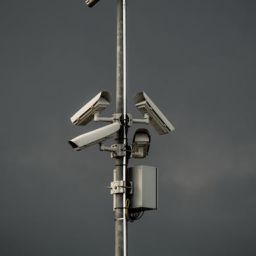
Florida’s decision to remove automated license plate readers (ALPRs) including Flock cameras, from state-road rights-of-way made headlines earlier this month.
As we covered in our September 3 newsletter, the move means many of the cameras operating along Florida’s state roads will be removed, but it does not necessarily mean the information those cameras previously collected simply disappears.
So what happens to the data that has already been collected?
Taking Down a Camera Doesn’t Erase the Past
An ALPR doesn’t simply record a license plate and forget it. Depending on the system and applicable policies, the technology can create a record containing information such as a vehicle’s license plate, the date and time of a sighting, the location where the vehicle was detected, and more.
Florida law specifically addresses the retention of ALPR records, which requires a maximum retention period for records containing images and data generated through an automated license plate recognition system. Florida law also places restrictions on the disclosure of certain ALPR information while allowing information to be disclosed to criminal justice agencies in the performance of their official duties.
It is important to note that removing the cameras, and deleting previously collected information, are two separate issues.
Could Previously Collected Flock CAMERA Data Still Be Used?
Potentially, yes.
Florida’s ALPR guidelines recognize that stored ALPR information can be used during criminal investigations. For example, ALPR information could be used to help establish where a particular vehicle may have been at a particular time.
Therefore, an ALPR record collected before a camera was removed could potentially become part of an investigation that occurs later.
As an example, consider this hypothetical scenario:
A vehicle is captured by an ALPR camera in Tampa several weeks before the camera is removed. Later, investigators are trying to determine whether that vehicle was in a particular area when a crime occurred.
The fact that the camera is no longer operating does not necessarily answer whether the earlier record still exists or whether investigators can lawfully access or use it.
These types of situations could become increasingly significant as Florida’s camera network changes.
 |
How Long Is the Information Kept?
This is where the whole issue becomes even more complicated.
Flock Safety announced in 2026 that it reduced its recommended default retention period for data collected by its license plate readers from 7 to 30 days. However, retention can depend on the applicable agency policy, legal requirements, and whether information has become part of an investigation or other record that is subject to different retention rules.
Florida’s statutes establish a maximum retention framework for ALPR records, while Florida law-enforcement guidelines call for agencies to have policies governing the use, storage, access and retention of ALPR information.
As a result, there isn’t necessarily a single answer of “7 days” or “30 days” that applies to every piece of information collected by every ALPR in Florida.
How can this affect a Criminal Case?
Digital evidence can become an important part of any investigation. ALPR information could potentially be used to establish that a certain vehicle was in a particular location at a documented time. Depending on the circumstances, that information could become relevant in investigations involving:
- Stolen vehicles
- Hit-and-run crashes
- Serious traffic offenses
- Fleeing or attempting to elude
- Drug investigations
- Burglary or theft investigations
- Violent crimes
- Other cases where investigators are attempting to establish a vehicle’s movements
And still, yet another important legal question remains:
How was the information obtained, maintained, accessed and ultimately used?
Those questions can become extremely significant to any case where digital evidence becomes part of a criminal prosecution.
What About Accuracy?
Accuracy is yet another issue that also shouldn’t be overlooked.
ALPR technology relies on cameras and computer algorithms to capture and interpret license plates. Florida’s own ALPR guidelines recognize that the technology produces license-plate information that can be used to generate alerts.
However, a license-plate reader identifying a vehicle may or may not also be capable of proving who was driving that vehicle.
A camera may identify a plate. Investigators may then connect that plate to a registered vehicle. But additional evidence may still be necessary to establish who was operating the vehicle, what happened, and whether the vehicle’s presence at a particular location actually connects the driver to a crime.
Protecting Your Rights
Florida’s decision to remove ALPR cameras from state-road rights-of-way has started a much larger conversation about how vehicle-location information is collected and used.
And the next legal questions may not involve the cameras themselves – they may involve the data left behind.
As Tampa-area law enforcement agencies adjust their ALPR programs, questions about data retention, access, sharing, accuracy and the use of historical vehicle-location information could become increasingly important in criminal and traffic cases.
While some of the cameras may be coming down, that doesn’t necessarily mean the evidence is.
If you have been arrested or cited and believe automated license-plate information, traffic-camera footage or other electronic evidence played a role in the investigation, an attorney can examine how that evidence was obtained and how it is being used in your case. For this, or any other legal needs, we offer a free consultation and detailed case evaluation.
EXPERIENCE. STANDARDS. RESULTS.
With a combined legal experience of over 50 years in both State and Federal courts, the Tampa Lawyers at Fernandez Law Group are committed to providing quality service to clients while maintaining a high level of respect, integrity, and appreciation for each individuals’ legal needs.
Our Personal Injury Lawyers work aggressively seeking compensation for damages and have recovered millions of dollars in settlements.
Our Criminal Defense Lawyers fight to protect the rights of our clients and have successfully litigated to reduce thousands of sentences and fines.
We offer free initial consultations with detailed case reviews.
CALL US TODAY AT 813-489-3222, USE OUR CONTACT FORM, EMAIL OR TEXT US FOR A FREE CONSULTATION AND CASE EVALUATION.
Learn More: https://thefernandezlawgroup.com
labor day dui enforcemebt is underway in the tampa bay area – 8/20/26