

PINELLAS CASE RAISES SERIOUS LEGAL QUESTIONS AS FLOCK CAMERAS CONTINUE WATCHING TAMPA BAY, AND SENATE BILL 488 TAKES EFFECT TODAY.
Florida’s Senate Bill 488 took effect on October 1, 2026, updating key transportation, vehicle operation, and crash-reporting rules across the state. Meanwhile, the fight over Flock cameras and automated license plate readers has taken yet another turn this week. This time, the story is right here in the Tampa Bay Area.
Just one day ago, the Pinellas County Sheriff’s Office announced the arrests of two former deputies accused of improperly accessing law-enforcement databases for personal reasons.
One of the cases involved an automated license plate reader system.
According to the Pinellas County Sheriff’s Office, investigators determined that former Deputy Karl Gwynne accessed multiple law-enforcement databases 381 times between January 2025 and July 2026 while seeking information about a woman he was interested in dating.
The Sheriff’s Office says approximately 300 of those searches involved its automated license plate reader system.
Gwynne has been charged with four counts of accessing a computer or electronic device without authority and one count of official misconduct. These are allegations, and the criminal cases will have to proceed through the courts.
FLOCK CAMERAS IN THE NEWS AREN’T GOING AWAY EITHER
As we reported previously, the Florida Department of Transportation ordered automated license plate readers located within the rights-of-way of roads on the state highway system removed.
The August 31 directive revoked existing permits for those devices and gave law-enforcement agencies 30 days to remove them. But that did not mean every Flock camera in the Tampa Bay Area was actually going to be removed.
The FDOT action applies to cameras within state highway rights-of-way. Local agencies can still have ALPR systems operating in other locations, subject to the applicable local policies, contracts and laws.
In Tampa Bay, many people still have a lot of questions regarding whether or not flock cameras are actually being removed, if it’s some of them or all of them, from what locations will might be removed from or stay, and what conditions or circumstances determine those outcomes?
There’s also been an influx of new questions coming into our office such as:
- Where are ALPR cameras still operating?
- Who can access the information?
- How is that access monitored?
- How long is the information retained?
- What legal justification is required for a particular search?
And perhaps most importantly for our clients, Tampa Bay Area drivers, defendants in criminal cases and others:
Can information generated by an automated surveillance system be challenged when it becomes evidence in a criminal case?
If law enforcement can use technology to identify where a vehicle has been, how is that information being accessed, searched, stored and used, then what happens when surveillance information becomes part of a criminal investigation?
YESTERDAY’S PINELLAS CASE PUTS THAT QUESTION IN THE SPOTLIGHT
The recent Pinellas investigation provides a real-world example of why oversight matters.
The Sheriff has said the department’s audit systems existed, but acknowledged that its previous approach did not adequately focus on unusually high-volume searches.
The agency now says it plans to strengthen its oversight, including paying greater attention to repeated searches involving the same license plate and other unusual activity.
That is an important development because an audit trail can become extremely significant in a criminal investigation.
If law enforcement technology produces information about where a vehicle was located, when it was observed, or what other cameras recorded it, attorneys may need to examine not only the information itself, but also how that information was obtained.
_(54490802773).jpg "PINELLAS CASE RAISES SERIOUS LEGAL QUESTIONS, FLOCK CAMERAS CONTINUE WATCHING, SENATE BILL 488")
WHAT IF A TRAFFIC STOP STARTED WITH A LICENSE-PLATE READER?
This is where the issue becomes especially important for criminal defense.
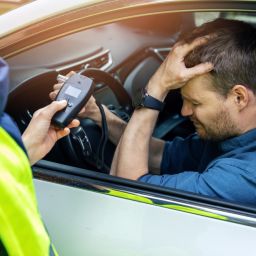
Imagine a driver is pulled over after an automated license plate reader generates an alert. The officer initiates a traffic stop and then:
- The officer then begins asking questions.
- A vehicle is searched.
- A warrant may eventually be requested.
- Additional evidence is discovered.
- An arrest follows.
The fact that an automated system generated an initial alert does not automatically answer every legal question that follows.
A defense attorney may need to examine the entire chain of events:
- Why did the system generate the alert?
- What information was contained in the original database?
- Was the information accurate?
- Who entered or accessed the information?
- Was the search conducted for a legitimate law-enforcement purpose?
- What did the officer know before initiating the stop?
- What information was communicated to the officer?
- Was the traffic stop legally justified?
- Did the stop last longer than legally permitted?
- Did the investigation expand beyond the original reason for the stop?
- Was a search conducted?
- Was consent requested or obtained?
- Was a warrant involved?
- What evidence was discovered afterward?
Those questions can matter in a DUI, drug case, theft case, firearm case, fleeing-and-eluding case and many other types of criminal investigations.
THE FOURTH AMENDMENT QUESTION
The Fourth Amendment protects against unreasonable searches and seizures.
However, modern surveillance technology has created legal questions that could not have been imagined when the constitutional language was written.
A single observation of a vehicle in a public place is completely different than law enforcement’s ability to search historical records and potentially reconstruct where a vehicle has been over time.
The level of data and amount of detail that can be collected over a period of time from automated license plate readers is one of the most troubling aspects of the current debate.
The legal question is not necessarily whether police may ever use an ALPR, it’s actually more complicated due to whether or not the manner in which the technology is used in a particular case crosses constitutional boundaries.
For legal teams, making that determination depends heavily on the facts such as how that data was collected, maintained, and accessed.
EVEN IF YOU HAVE NEVER BEEN ARRESTED THIS IS STILL SOMETHING TO BE CONCERNED ABOUT
You don’t have to be a criminal suspect to be affected by this technology. Most drivers in Tampa Bay simply get in their vehicles, drive to work, go shopping, take their children to school, visit friends, attend appointments and go home.
Along the way, their vehicle may pass hundreds of cameras, but that does not mean they are suspected of a crime. However, modern law enforcement technology is exponentially increasing the amount of information that may potentially be available during an investigation. This greatly improves their chances of connecting a driver to a crime, while also having very detailed information about their movements days or weeks before and after the incident.
This level of data collection and retention makes the need for strong and proper oversight, including rules governing access, retention, auditing and use even more important.
It also makes the constitutional questions surrounding digital surveillance increasingly relevant to ordinary drivers and citizens.
The Pinellas arrests come as Florida is already dealing with significant changes involving ALPR technology. Florida’s transportation department ordered ALPR cameras within state highway rights-of-way removed. Meanwhile, local agencies have been taking different approaches to what happens next.
Pinellas County is scheduled to discuss the issue at an October 8 workshop, giving residents another opportunity to see where the local debate is headed.
While some Flock cameras are coming down, the legal and technological issues surrounding ALPR surveillance are not going away, and instead, are becoming much more important.
IMPORTANT TRAFFIC-LAW CHANGE BECOMES EFFECTIVE TODAY
October 1, 2026 also brings a significant change that every Tampa Bay driver should know about. Under Senate Bill 488, Florida increased the estimated property-damage threshold that requires a driver involved in a crash to immediately notify law enforcement from $500 to $2,000.
Florida Statute §316.065 now provides that a crash involving injury or death, or apparent damage of at least $2,000 to a vehicle or other property, must be reported to the appropriate law-enforcement agency.
It is still important for drivers to NOT assume that a seemingly minor collision is legally or financially insignificant. Damage estimates at the scene can be wrong, and injuries may not always be immediately apparent.
A crash that initially looks like nothing more than a damaged bumper can become an insurance claim, personal-injury case or even a criminal matter depending upon what actually occurred.
Whether in doubt or not, we always recommend thoroughly documenting the accident with as many details as possible. Be sure to include photographs, insurance information, witness information and the condition of the vehicles – all of which can become extremely important later.
WHAT SHOULD YOU DO IF YOU BELIEVE SURVEILLANCE TECHNOLOGY WAS INVOLVED IN YOUR CASE?
If you have been stopped, arrested or charged with a crime and believe an automated license plate reader, Flock camera, traffic camera or other surveillance technology played a role, don’t assume that the existence of electronic evidence means the case is over.
The technology may provide evidence, but evidence can be examined, the circumstances surrounding the evidence can be examined, and the legality of the search, stop, seizure or investigation can also be examined.
The sooner an attorney can begin looking at those issues, the better the opportunity becomes to identify potentially important evidence and legal questions which can be instrumental in any defense.
QUESTIONS ABOUT A TAMPA BAY TRAFFIC STOP, DUI ARREST OR CRIMINAL CASE?
At Fernandez Law Group, our Tampa criminal defense, DUI and traffic violation attorneys understand that what happens during the first few minutes of a traffic stop can have consequences long after the officer leaves the scene.
If you are facing a DUI, criminal traffic charge, arrest, search or other criminal allegation in Hillsborough, Pinellas, Pasco or the surrounding Tampa Bay area, contact our office for a free consultation and detailed case evaluation.
EXPERIENCE. STANDARDS. RESULTS.
With a combined legal experience of over 50 years in both State and Federal courts, the Tampa Lawyers at Fernandez Law Group are committed to providing quality service to clients while maintaining a high level of respect, integrity, and appreciation for each individuals’ legal needs.
Our Personal Injury Lawyers work aggressively seeking compensation for damages and have recovered millions of dollars in settlements.
Our Criminal Defense Lawyers fight to protect the rights of our clients and have successfully litigated to reduce thousands of sentences and fines.
We offer free initial consultations with detailed case reviews.
CALL US TODAY AT 813-489-3222, USE OUR CONTACT FORM, EMAIL OR TEXT US FOR A FREE CONSULTATION AND CASE EVALUATION.
Learn More: https://thefernandezlawgroup.com
Pinellas case raises serious legal questions as Flock cameras continue watching Tampa Bay, and Senate Bill 488 takes effect today – 10/1/26